Key takeaways
- Orientation and shading do a lot of work before any equipment is chosen.
- A well-insulated, well-sealed envelope keeps comfort steady.
- Windows should be sized and placed for light and heat control.
- Plan for solar panels and efficient equipment from the start.
Orientation and shade
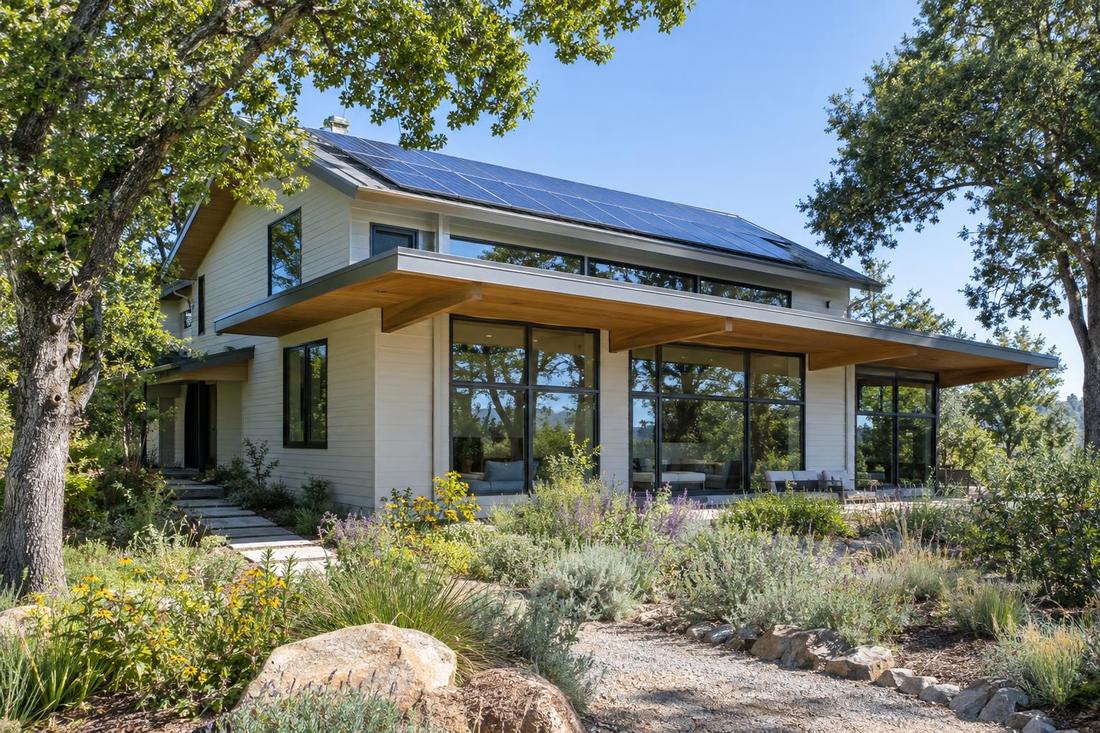
Place the long side of the house to the south when possible and use overhangs to block high summer sun while admitting low winter sun. Trees and porches add shade. These simple choices reduce cooling needs.
They are simple to include when planned at the start.
The building envelope
Insulation, air sealing and moisture control make the biggest difference to comfort. Details at corners, windows and the roof matter as much as the thickness of insulation. The U.S. Department of Energy offers clear guidance.
A blower door test can confirm air tightness.
Windows and daylight
Good windows reduce heat gain and loss and let in daylight. Size and place them to balance view, light and privacy. Shading and glass choices vary by orientation.
Daylight reduces the need for electric lights.
Systems and solar
Efficient heating and cooling equipment, good ductwork and ventilation round out the design. Solar-ready roofs, with clear surfaces and conduit paths, make later panels easy to add. Ask your team to coordinate these items early.
A mechanical designer can size the system correctly.
Official sources and further reading
- U.S. Department of Energy: Energy Saver
- American Institute of Architects
- National Association of Home Builders
These are independent organizations. Links open in a new tab.
Quick answers
Does efficient design change how a house looks?
No. Efficiency works with any style.
What is the most important step?
A tight, well-insulated envelope and good orientation.